Environmental Public Hearing
Environmental Impact Assessment Process:
Environmental impact assessment (EIA) was first introduced in India under Environmental Protection Act (EPA) 1986. But formally it came in to effect when Ministry of Environment and Forest (MoEF) on 27 January 1994, under the provision of EPA 1986 promulgated the EIA notification making environmental clearance mandatory for expansion or modernization of any activity or for setting up new projects. Although this notification did not had provisions for involving the public in the decision making process through a process of consultation, the concept of Public Hearing was introduced with the first amendment to the notification (S.O. 356 E dated 4th May, 1994), which was later strengthened in a further amendment (S.O. No. 318 E dated 10th April, 1997). Subsequently, EIA processes have been strengthened by MoEF by a series of amendments while currently in practice is EIA notification 2006 (http://envfor.nic.in/legis/eia/so1533.pdf) and its amendments.
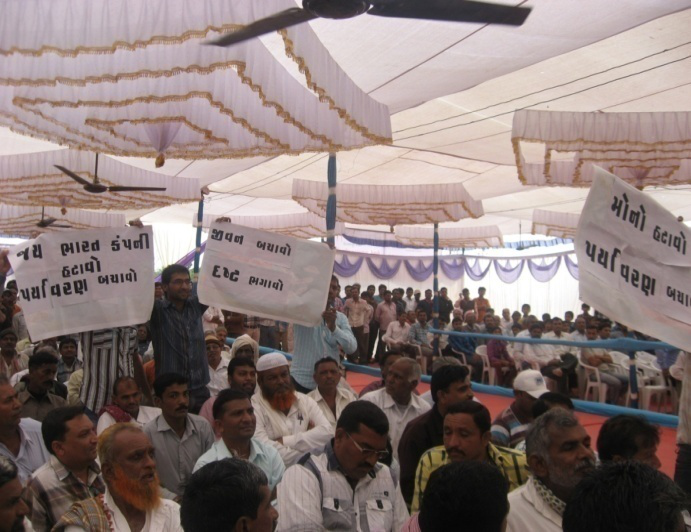
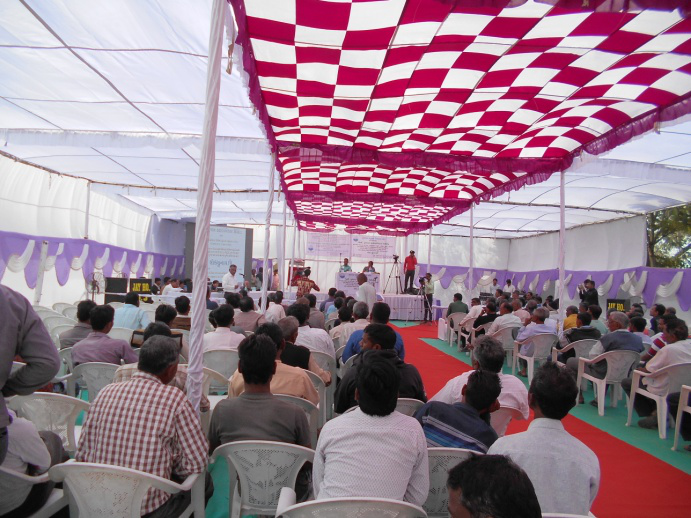
According to this notification, the environmental clearance process comprise of four stages namely, Screening, Scoping, Public consultation and Appraisal, all of which may not be applicable to all projects. However in the EIA process, the public hearing (or public consultation) stage is the only stage where there is some scope for intervention by local communities, where comes our role. Further, the consultation process has been divided into two, public hearing for local people and submission in writing from other plausible stakeholders. So NGOs/civil society organization (unless locally situated) have been excluded to take part in the public hearing, but can send their written presentations/comments as plausible stakeholders.
Environmental Public Hearing:
Reason for intervention in EPH:
Role of Paryavaran Mitra:
| Year | No. of EPH | Total Organized |
| 1998-99 | 14 | 29 |
| 1999-2000 | 9 | 14 |
| 2000-01 | 3 | 5 |
| 2001-02 | 47 | 61 |
| 2002-03 | 17 | 43 |
| 2003-04 | 27 | 52 |
| 2004-05 | 17 | 39 |
| 2005-06 | 27 | 49 |
| 2006-07 | 24 | 44 |
| 2007-08 | 36 | 59 |
| 2008-09 | 81 | 91 |
| 2009-10 | 64 | 70 |
| 2010-11 | 72 | 72 |
| 2011-12 | 50 | 59 |
| 2012-13 | 79 | 83 |
| 2013-14 | 87 | 87 |
| 2014-15 | 71 | 98 |
| 2015-16 | 91 | 91 |
| 2016-17 | 70 | 76 |
| 2017-18 | 53 | 110 |
| Total | 939 | 1232 |
- Sending our comments on the Environment Impact Assessment Reports as plausible stake holders in the State of Gujarat.
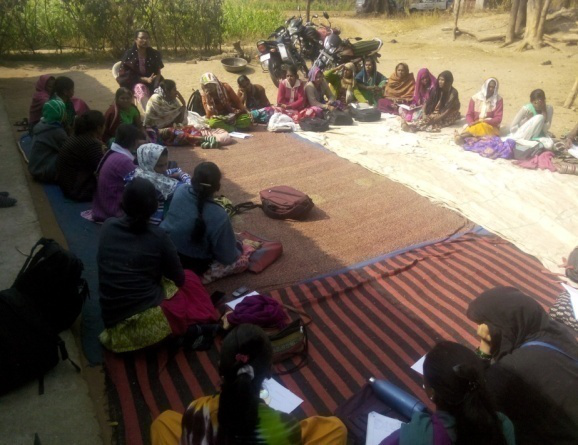
- Sharing information with local communities about the upcoming project, discussing issues with the affected people, encouraging public comments and participation in the public hearing.
- Use of local voluntary organizations/NGOs, groups, and individuals to reach people in rural or remote areas to inform them about the upcoming public hearing and environmental effects of projects and motivate them to participate in the EPH.
- Raise awareness among locally affected people about public hearing process and reviewing executive summary of EIA by organizing meetings. Also encourage them to participate and raise their issues effectively during the public hearing.
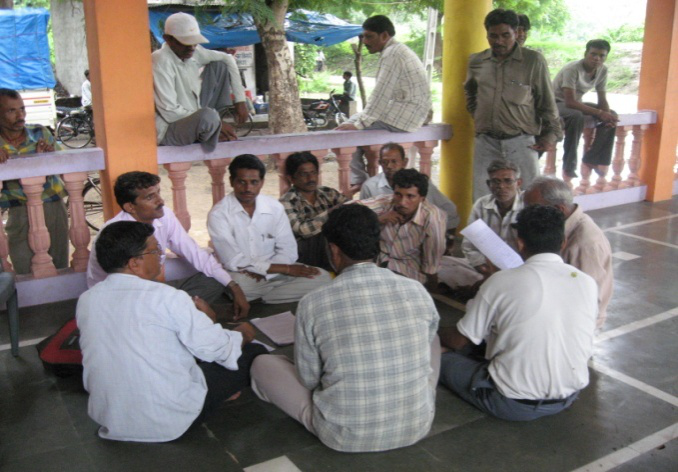
- Legal intervention in some selected public hearings that need intensive guidance and follow up.
- We also do post EPH follow up by putting forward issues of locally-affected people that were not properly addressed to concerned authority (Ministry of Environment and Forest/Gujarat Pollution Control Board).
List of Environment Public Hearings in the State of Gujarat can be viewed at the following link http://www.gpcb.gov.in